MLM Merchant Account: How to Get Back to Accepting Cards After Stripe, Square or PayPal Shut You Down

A direct sales business owner reading an email on her phone at a home office table with skincare samples and shipping boxes


Tech Lead at Adaptiv Payments | More
The first thing most MLM owners tell me on a call is, "We got shut down out of nowhere and I can't get anyone on the phone." Most of the MLM shutdowns we see come with maybe one email of warning, sometimes none, and no one to call. Here is what to do next.
Answering the Shutdown: How an MLM Merchant Account Gets You Processing Again
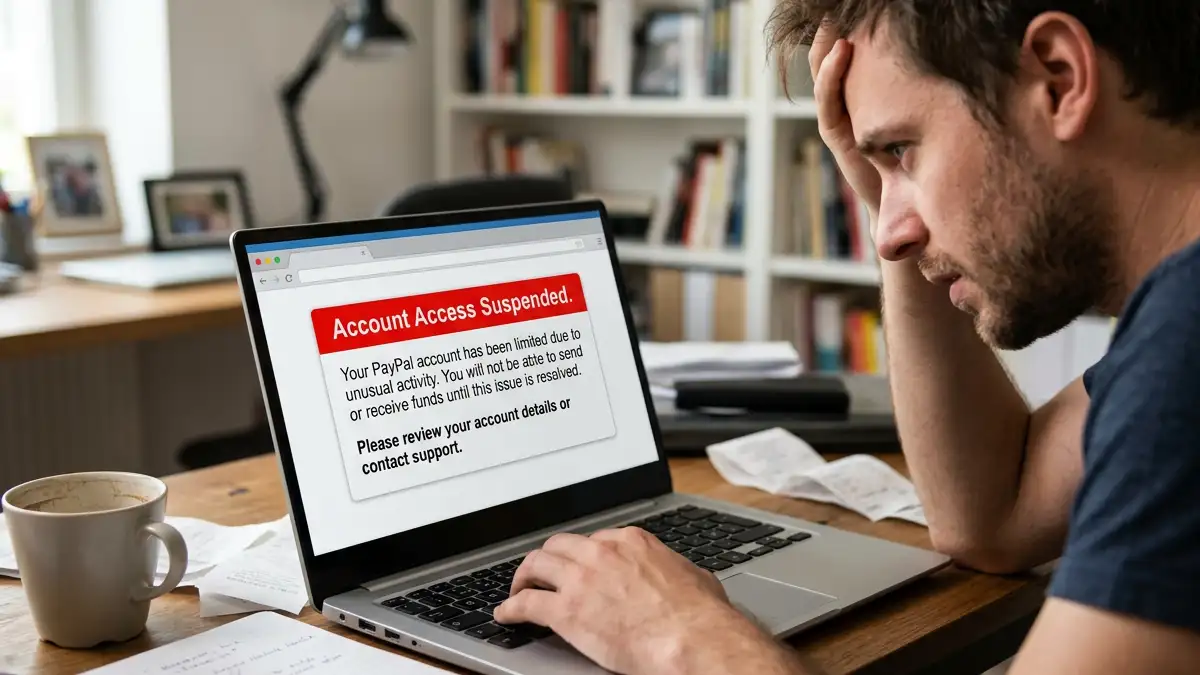
You opened your inbox and found a shutdown notice. Stripe, Square, or PayPal decided your multi level marketing company does not fit their acceptable use policy, and now your sales are stuck. Your distributors cannot process orders, your autoship is broken, and your cash flow stopped overnight.
This happens because most aggregators either prohibit MLM outright or bury a pre-approval requirement in their terms. Stripe's prohibited businesses list includes "multilevel marketing services offering commission or recruitment-based sales." Square's terms ban "unauthorized multi-level marketing businesses." PayPal bans pyramid schemes and requires pre-approval for MLM and direct selling. I tell owners that an instant approval from an aggregator just means nobody's read your file yet. They will.
The way I explain it on calls: we find you a bank that knows exactly what an MLM is and says yes anyway. An MLM merchant account gives you your own Merchant Identification Number (MID) and lets you run credit card processing, ACH, and recurring autoship billing with direct underwriting. That means your compensation plan, refund policies, and marketing materials are reviewed and accepted up front; the processor is not guessing what you do. At Adaptiv Payments we work with direct sales companies selling everything from skincare and protein powder to candles, coffee and essential oils.
The rest of this article walks through why MLM is considered high risk, what underwriters actually look at, and how to structure your application so you can get stable payment processing and protect cash flow.
What Is Multi-Level Marketing (MLM) From a Payment Processor's View?
When an MLM file lands on a risk desk, the first question is usually, "Who's actually buying this stuff?" Processors care about money flow, dispute probability, and regulatory exposure. Here is what they see:
- Distributors sell products and recruit other distributors into a downline. Commissions are earned on personal sales and on the sales of recruited members. These complex payout structures are a defining characteristic of the MLM business model.
- Autoship or subscription orders run monthly, generating recurring billing transactions that require ongoing cardholder consent.
- There is no "MLM" Merchant Category Code in Visa or Mastercard tables. Instead, MLM merchant accounts are usually coded under a direct marketing category like MCC 5963 (Door-to-Door Sales), 5964 (Catalog Merchants), 5968 (Continuity/Subscription) or 5969 (Other Direct Marketers), or under the code for the product you sell.
- Common verticals include beauty and skincare, kitchenware, jewelry, travel clubs, CBD and supplements, and coaching or digital info products. Each carries different risk levels in the eyes of acquiring banks.
- Underwriters look beyond the product. They examine how you recruit, what income promises you make, how refunds work, and whether autoship billing is properly disclosed to customers.
Is Your MLM a Pyramid Scheme? Where Processors Follow the FTC Line
Owners always ask me whether the bank thinks they're a pyramid scheme, and I tell them honestly, it depends on whether you can show me customers who aren't also selling. Processors don't make a legal ruling, but they follow the same signals the FTC uses. The FTC's "Business Guidance Concerning Multi-Level Marketing" (updated April 2024) says the key test is whether rewards come from real retail sales to customers or from recruiting. Buying product or starter packs just to qualify for commissions is a red flag.
A buyback policy alone does not settle it. The FTC says a buyback policy is not a defense if your rewards still come from recruiting or from distributors' own purchases. A merchant account is not a legal endorsement of your business model; it is a financial agreement.
In September 2026, Amway agreed to a $225 million settlement with the FTC and Washington State over income claims. Since the Amway settlement, underwriters have been asking our MLM merchants a lot more about income claims and retail sales. Income disclosure statements, autoship rules, and inventory buyback policies are typically requested during merchant account underwriting because they affect both legal risk and chargeback ratios. Have these documents ready up front so an acquiring bank can understand your model clearly instead of getting spooked later and freezing funds.

A person at a desk reviewing financial reports next to a laptop
Credit: Adaptiv Payments
Why MLM Merchant Accounts Are Considered High Risk
High risk payment processing means the acquiring bank sees a higher probability of financial loss from chargebacks, fraud, or regulatory action. Multi-level marketing companies are often classified as high risk due to regulatory scrutiny and legal uncertainties. Here is what specifically puts an MLM merchant account in that category:
- Disputes come from several directions at once: buyer's remorse, failed recruiting expectations, and autoship charges customers forgot about.
- Heavy reliance on card-not-present transactions (online orders, phone enrollments) increases fraud exposure.
- Sudden volume spikes from recruitment pushes or product launches strain refund policies and customer support.
- Independent distributors exaggerating product benefits or income opportunities create inconsistent customer experience and more disputes at the bank level.
- High distributor turnover adds risk, because departing distributors often stop looking after their customers.
- Rolling reserves may be imposed on high risk merchant accounts to cover potential chargebacks. This is standard, not punitive.
I tell MLM owners the same thing every time: high risk is about the business model, not about you. Being high risk means the processor needs more documentation, tighter monitoring, and often reserves. Adaptiv Payments places MLM accounts with acquiring banks that underwrite high risk direct selling models.
Common Challenges MLM Businesses Face With Credit Card Processing
We hear from MLM owners after a shutdown almost every week, sometimes a few in one day. Many businesses running MLM or network marketing models hit the same walls repeatedly.
- Getting approved at all: mainstream merchant services providers and aggregators often decline or quietly flag MLM accounts once they see recruitment-based compensation or "business opportunity" marketing language.
- Sudden shutdowns: an email from Stripe, Square, or PayPal closing the account and holding your funds for months after a complaint or a chargeback spike.
- Cash flow damage: delayed settlements, frozen rolling reserves, and clawed-back chargebacks make it hard to pay commissions and suppliers on time. Money stops moving, and so does your business.
- Technical breakdowns: recurring billing tools or network marketing software integrations break when a generic gateway pulls the plug without notice. Commission engines stop triggering. Orders stall.
- Misaligned terms: even high risk merchant accounts can have fees, reserves, and monitoring that do not match your actual risk profile if the processor does not understand your MLM business model.
Key Risk Drivers: Chargeback Ratios, Fraud and Customer Experience
Underwriters watch specific metrics when assessing an MLM merchant account. Here are the numbers and behaviors that matter most.
The card networks run monitoring programs with hard thresholds. Visa's Acquirer Monitoring Program (VAMP) counts fraud reports plus disputes against your settled transactions, and in the U.S. a merchant with 1,500 or more of them in a month and a ratio of 1.5% or higher is labeled excessive. Mastercard's Excessive Chargeback Merchant program starts at 100 chargebacks and a 1.5% ratio in a month. Land in either program and you face fines, and your acquiring bank may close the account. Most processors start asking questions well before those lines.
Common MLM practices that drive disputes:
- Unclear autoship terms where buyers do not realize they signed up for monthly charges.
- Promoters pushing "everyone makes money" claims over Zoom or at parties.
- Reps who disappear, leaving customers to go straight to their bank for a refund.
- Friendly fraud from disgruntled ex-distributors filing disputes instead of using your support channels.
Fraud surfaces in predictable patterns: stolen cards used for initial sign-up fees, synthetic identities created to hit sign-up bonuses, and fabricated sales to inflate rank. Fraud screening tools flag these patterns and stop many of them before they become chargebacks.
The fix I see work most often for MLMs is making autoship stupid easy to cancel. Plain-language checkout pages, clear receipts, easy cancellation links, and fast refunds where promised all reduce dispute exposure.
Adaptiv Payments sets up fraud screening and chargeback alerts so you see disputes coming and can refund before they count against your ratio.
MLM Autoship and Recurring Billing Rules You Can't Ignore
When an MLM account runs into problems, it is usually autoship. Someone forgets they signed up, sees the charge, and calls their bank. Recurring billing makes subscription orders easy for your customers, but it also generates the most disputes when done wrong.

A customer opening a monthly autoship box of wellness products while checking a charge on her phone
Credit: Adaptiv Payments
- Card brands treat autoship as a recurring transaction. You must disclose billing intervals, amounts (or how the amount is calculated), and cancellation steps before a card is first charged.
- If you run a free trial or intro price that rolls into autoship, Visa requires a reminder at least 7 days before the first full-price charge, with cancellation instructions that actually work.
- Negative-option billing and free-trial-to-paid funnels fall under the U.S. ROSCA (Restore Online Shoppers' Confidence Act), which requires clear disclosure, express consent and a simple way to cancel ongoing charges.
- Underwriters want recordkeeping: proof of consent (checkbox with timestamp, or recorded verbal authorization), CRM logs of cancellation requests, and evidence of how you respond when someone claims they tried to cancel but were still billed.
- Transparent refund and cancellation policies reduce chargebacks by removing the reason a cardholder calls their bank instead of calling you.
Adaptiv Payments helps merchants line up autoship flows in their MLM software, shopping cart, or funnel builder with card brand rules so that recurring billing does not become your main source of chargebacks.
What Underwriters Ask Before Approving an MLM Merchant Account
High risk merchant accounts require specialized underwriting and evaluation of business practices. Here is what to have ready before you submit your application.
- Corporate formation papers, government ID for all beneficial owners, voided check or bank letter, last three to six months of processing statements (if available), and recent bank statements.
- A detailed compensation plan showing how distributors earn commissions based on personal sales vs. downline volume. Payment processors may examine a business's compensation plan and product sales for compliance.
- For higher projected volumes or international distributor bases, underwriters may ask for financial statements, income disclosure statements, inventory buyback policies, and full terms and conditions from your enrollment process.
- They will ask: what share of volume comes from retail customers vs. distributors? Do you cap initial inventory purchases? How do refunds work on starter kits? How long does your buyback window run? (The Direct Selling Association's code: inventory bought within 12 months, bought back at 90% or more of net cost.)
- They also review your website, funnels, and social media for implied earnings claims, lifestyle imagery, and health claims. Those marketing promises create disputes and attract regulator attention.
| What underwriters ask for | Why it matters |
|---|---|
| Compensation plan | Shows whether commissions come from retail sales or from recruiting |
| Share of sales to non-distributors | Real customers are the clearest sign of real product demand |
| Inventory buyback policy | The DSA code: inventory bought within 12 months, bought back at 90% or more of net cost |
| Income disclosure statement | Earnings claims have to reflect what a typical participant earns after expenses |
| Autoship terms and consent records | Forgotten autoship charges drive many MLM disputes |
| Website, funnels and social posts | Lifestyle images and income promises count as implied earnings claims |
| 3 to 6 months of processing statements | Shows your volume, refunds and chargeback history |
Adaptiv Payments walks you through this underwriting checklist in advance so you can answer questions once, cleanly, instead of in a rushed back-and-forth after your application lands on a risk desk.
Designing Your Application to Look Stable, Not Risky
Package your MLM business for a high risk merchant account review with these steps:
- Lead with retail: the first number I ask an MLM owner for is what percent of their sales go to people who aren't distributors. Highlight any customer-oriented loyalty programs or promotions that show real product demand.
- Tighten written policies before applying. Clear refund terms, a simple autoship cancellation policy, and a visible inventory buyback policy should all be published on your website and in order confirmations.
- Clean up marketing. Remove "quit your job" type claims. Earnings claims have to reflect what a typical participant earns after expenses, and the FTC treats lifestyle photos as implied earnings claims. Visa's rules treat misleading business-opportunity income claims as misrepresentation.
- Prepare a short cover memo: realistic projections, number of active distributors today, how you train reps on selling within the rules, and what tools you use to monitor chargebacks and fraud.
Adaptiv Payments can review application materials, flag items most likely to bother an underwriter, and work with acquiring banks that already understand network marketing so you are not explaining the model from scratch during the application process.
Payment Features MLMs Should Demand From a High Risk Merchant Account
Not all high risk merchant accounts are built the same. Here is what your MLM needs from a processor. Judge it on total cost, not just transaction fees: high risk payment processors typically charge more than standard providers, and that is the trade-off for stable processing.
- Flexible payment options: Visa, Mastercard, Discover, Amex where supported, plus debit cards, ACH and e-checks for large distributor orders, and digital wallets. If you have distributors abroad, ask about multi-currency processing.
- A payment gateway that meets PCI DSS standards, with tokenization for card-on-file so you can run recurring billing securely.
- Virtual terminals for call centers or back-office staff handling phone orders, and support for bulk processing of large orders and enrollment fees.
- Integration with your MLM software: commission engines, back offices, and shopping carts, so enrollments, autoship, and commission triggers all run through the same merchant account. Test transactions in a sandbox before you go live.
- Fraud filters, 3D Secure, velocity checks on sign-up fees, and chargeback alerts that give you a chance to refund before a dispute is filed.
Adaptiv Payments sets these up and helps you tune gateway settings so your setup balances approval rates, fraud control, and long-term account stability for how your multi level marketing business actually operates.
Keeping Your MLM Merchant Account Healthy Once You're Approved
The MLM accounts that stay open are the ones where the owner actually picks up the phone when we call. Your account stays open only if you manage it.
- Monitor your chargeback ratio weekly, not quarterly. If it starts creeping toward the card network thresholds, adjust refund and support policies immediately.
- Audit your field's marketing regularly. Spot-check social media, webinar decks, and landing pages for unauthorized earnings or product claims. Those claims lead to complaints, disputes, and regulator interest across the industry.
- Invest in customer experience: fast acknowledgment of complaints, simple online cancellation, clear tracking updates, and honest ETAs when inventory is backordered. Fewer frustrated buyers means fewer chargebacks.
- Reserves and rolling reserves are common in high risk accounts. Over time, you can sometimes negotiate reserve levels down by showing stable processing history and clean compliance behavior. This is where reputation with your acquiring bank matters.
- Keep communication open with your acquiring bank's risk team. When you anticipate volume increases from promos or launches, give them a heads-up. Show them your improving metrics. Have documentation ready.
Adaptiv Payments stays in touch with merchants and acquiring banks, helping you answer risk-team questions, look into fraud patterns, and present your improving history when it is time to ask for better terms.
How Adaptiv Payments Supports MLM, Network Marketing and Direct Sales Merchants
Adaptiv Payments focuses on high risk merchant accounts and payment gateways for models mainstream providers avoid: MLM, network marketing, direct sales, online coaching funnels, and nutraceutical continuity. Most of the MLM owners we work with came to us after a processor approved them in an afternoon and shut them down three months later.
- We work directly with acquiring banks comfortable with high risk. We present your application with context around your compensation plan and autoship model and push to get you a merchant account that matches your real risk profile.
- Our setups include recurring billing tools, virtual terminals, ACH processing, chargeback alerts, and fraud screening.
- We do not provide legal advice. You should work with experienced MLM counsel on FTC, state, and income-claim issues. We focus on what underwriters need to see on the payments side and on keeping your account in good standing with the card brands.
FAQ: MLM merchant accounts and payment processing
Stripe's prohibited businesses list includes "multilevel marketing services offering commission or recruitment-based sales." An MLM that pays commissions on recruiting is outside its terms, even if signup went through. A dedicated MLM merchant account is underwritten for your model before you start processing.
PayPal bans pyramid schemes and requires pre-approval for multi-level marketing and direct selling. Without that approval, your account can be limited and your funds held.
There is no MLM-specific merchant category code. Processors usually use a direct marketing code like 5963, 5964, 5968 or 5969, or the code for the product you sell. Which one fits depends on how you sell and whether you bill on autoship.
Often, yes. Rolling reserves are common on high risk accounts. The amount depends on your processing history, your chargeback ratio and your business model, and a clean track record is the best argument for lowering it later.
No single document does. The FTC says a buyback policy is not a defense if your rewards still come from recruiting or from distributors' own purchases. Underwriters still want to see your buyback policy and income disclosures, so have them ready, and work with MLM counsel on the legal side.
Visa labels a U.S. merchant excessive at a 1.5% ratio of fraud reports plus disputes with 1,500 or more in a month. Mastercard's program starts at 1.5% and 100 chargebacks in a month. Most processors want you well below both.
If you just got shut down, call us. Tell us what happened, and we'll tell you straight whether we can help. Bring your shutdown notice, your current chargeback ratios, and your compensation plan. We will map out a path to a stable MLM merchant account so you can get back to running your company.