PayPal Account Shutdown
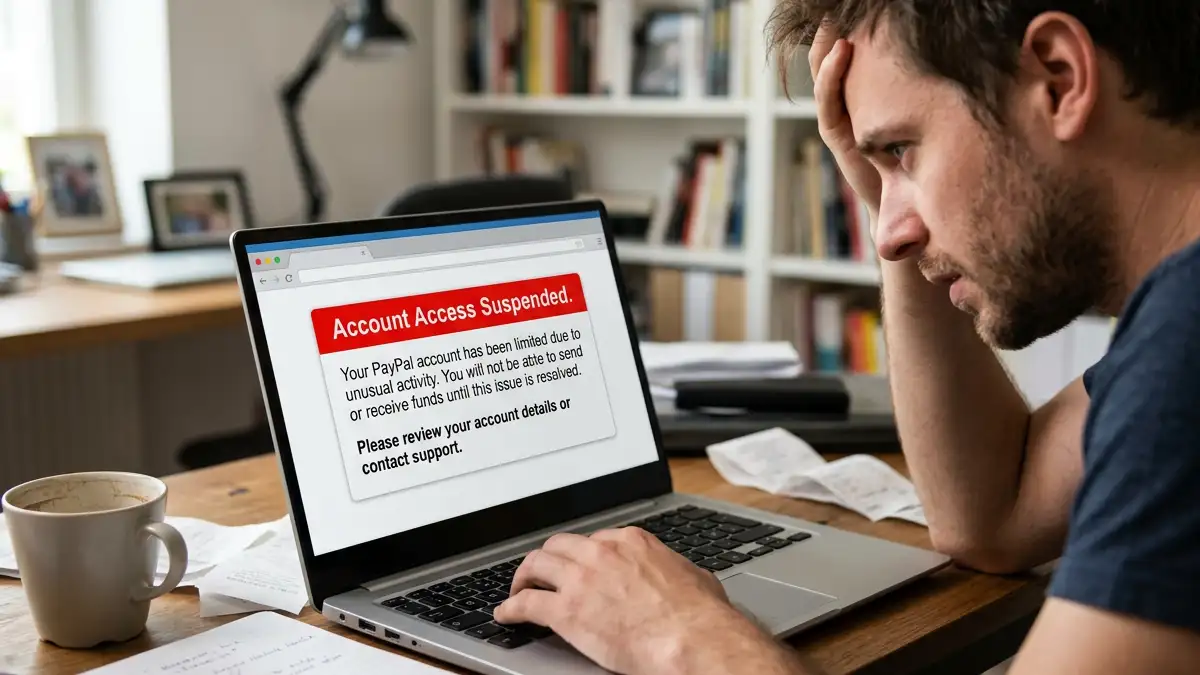
PayPal account shutdown on a laptop screen
Credit: Adaptiv Payments


Account Executive at Adaptiv Payments | More
PayPal is one of the world's leading payment processors, managing millions of accounts for both businesses and consumers. To mitigate risk, it has a clear Acceptable Use Policy and may terminate accounts that do not meet these standards without warning.
A shutdown often begins with limitations and holds, where merchants can reactivate their accounts if certain conditions are met. These limitations may be triggered by policy issues, disputes, or verification reviews. While it is sometimes possible to appeal a closure, certain business models are not accepted on the platform, meaning merchants will need to find alternative processing tools.
This article will cover the different types of limitations, how to respond to a closure, and payment alternatives for those whose products do not align with the Acceptable Use Policy.
What Do Closed Accounts and Limitations Mean on PayPal
There are different ways that you might lose access to your PayPal account, some of which are permanent and others that may be removed.
- Temporary Limitation: This restricts your ability to send, withdraw, or receive money. You may see that there is no option to transfer funds, and clients may say you do not appear as an option to send money. Many users in high-volume sales face this limitation because of PayPal's transaction limits. To resolve it, you will address any unresolved issues flagged in the Resolution Center.
- Hold or Reserve: A percentage of your remaining balance will be held in reserve until PayPal can determine whether further action is needed. This may occur because of high international sales volume or multiple open disputes. You may receive a message requesting business information. During this time, the held funds cannot be transferred to bank accounts or other accounts.
- Permanent Limitation: This is the effective shutdown state, meaning you can no longer use the account. This may happen because you violated PayPal's policy on CBD transactions or tried to circumvent rules on PayPal and gun payments. You should ask for clarification on whether you can open a new PayPal account or are entirely banned.
Why PayPal Shuts Down or Limits Accounts
Understanding the reasons why PayPal shuts down or limits accounts will help you avoid cash flow issues or appeal if you believe the limitation was a mistake. These are the most common reasons for account closures.
Acceptable Use Policy and Restricted Categories
PayPal's Acceptable Use Policy prohibits certain transaction types, including those involving firearms and weapons. Businesses in other MCC codes are considered restricted and require preapproval. These categories include gambling, pharmaceuticals, telemedicine, and online dating.
A product or service may be legal, but still be restricted due to PayPal's risk assessment. PayPal is especially averse to financial products like credit repair due to the complex regulatory requirements that would require significant oversight from its support team.
Like other companies, PayPal continually updates its policies based on market changes, regulatory updates, and new risk assessments. A company that was once considered acceptable may face an abrupt account closure if the Acceptable Use Policy is changed or if market forces shift.
Disputes, Claims, and Chargeback Pressure
High dispute rates may trigger a closer review and potential restrictions. Additionally, claims like "item not received" or "unrecognized charge" can lead to fraud concerns.
Like other payment processors, PayPal expects merchants to implement chargeback prevention strategies and maintain an acceptable chargeback rate, because chargebacks can result in financial losses for the processor. High rates or abrupt chargeback spikes may lead to limitations or future negative actions.
Unusual Activity, Fraud Suspicion, and Account Security Events
PayPal may implement precautions when unusual or suspicious activity is detected. Unauthorized use may lead to your account being closed, and you will need to show evidence to have it reopened. Common triggers include account testing, volume spikes, and sudden shifts in transaction geography.
While strong fraud protection can prevent these issues, the payment provider may still choose to limit access while you resolve the problem.
Verification Gaps and Documentation Requests
To mitigate risk and ensure payment compliance, PayPal will ask for documents before restoring full access or reopening your account.
You will need to show your personal ID, and you may also have to provide business documentation. Failure to offer this evidence can result in permanent account closure.
PayPal may also need evidence that your products align with its Acceptable Use Policy, such as supplier information, product listings, and website copy. For certain "edge cases," such as some health and beauty products, this could result in closure even when the correct information is presented.
PayPal ultimately has the final say on whether to keep your account closed or reopen it, so adherence to its policies is crucial to avoiding revenue issues.
Warning Signs Before a PayPal Account Limitation or Shutdown
If you notice these signals, it's important to immediately prepare documentation and begin resolving the issues before you receive a final warning.
- Holds or Reserves: Your withdrawals may be limited, or you might need to keep rolling reserves.
- "Pending" Reviews: PayPal may implement a review process on your transactions, during which time they will appear as "pending."
- Blocked Transfers: PayPal may cancel transfers to external bank accounts.
- Clustered Disputes: Multiple disputes with the same reason codes, like "unrecognized charge," could signal a potential account closure.
- "Payment Review" and Reversals: Customers may say they can't transfer funds, or the funds are immediately returned to the same account.
What to Do During a PayPal Account Limitation
If you see these issues, do not create a new account to circumvent the review process. Instead, follow these steps.
- Check Resolution Center: Your account may list certain requirements, including links to acceptable versions of the documentation. Complete them promptly and provide the exact documents requested.
- Export Evidence: Download files like transaction history, disputes, refunds, customer communications, and tracking or proof of fulfillment. Take screenshots of any communications with PayPal's support team.
- Stabilize Disputes: Resolve any obvious cases as soon as possible, and adjust your refund process to avoid escalations.
- Fix Customer Communication: Provide proactive shipping or delay updates to reduce "unrecognized, not received" claims.
- Pause Risk Amplification: Avoid posting paid ads and stop any sudden volume spikes.
Next, follow our guide on what to do if your ecommerce merchant account gets suspended based on the specific triggers and review needs.
| Trigger | What PayPal Reviews | What to Fix |
|---|---|---|
| High dispute or complaint rate | Dispute logs and policy language | Improve the cancellation and refund process |
| "Not received" claims | Tracking logs | Tighten shipping deadlines and enhance tracking protocols |
| "Unrecognized" claims | Descriptors and receipts | Clarify descriptors and confirm all orders |
| Verification gap | ID and business documents | Submit legible documentation and double-check account information |
| Restricted category ambiguity | Product list and site content | Ensure clear product pages, policies, and disclosures |
| Volume spikes | Inventory and support capacity | Staged ramp plan |
| Refund spikes | Reason codes | Ensure clear policies and enhance customer services |
| Fraud suspicion | Fraud patterns and fraud control measures | Tighten fraud rules and use step-up challenges for risky transactions |
| Cross-border mismatch | Shipping, returns, and support reports | Clarify international policies |
| Customer support delays | Response SLAs | Improve self-serve policies |
Strong evidence is key to resolving a limitation or account closure. Track each improvement and present any requested information as soon as possible.
Do not attempt to circumvent the Acceptable Use Policy by changing descriptors, using coded language, or hiding important information. Not only will this not reverse an account closure, but it may damage your reputation with customers, cause further disputes, and threaten your banking relationships. Instead, you may consider finding a new processor that is better matched to your business model.
Payment Alternatives When PayPal Isn’t Viable
As a consumer-friendly digital wallet and payment service provider, PayPal's Acceptable Use Policy is designed to mitigate risks at all levels of the service. Its merchant accounts are pooled, meaning they restrict certain high-risk categories to avoid introducing excessive risk to other merchants.
This is why businesses often prefer an underwritten merchant account for high-risk businesses, specifically designed for industries like travel, coaching, or nutraceuticals. These accounts combine merchant accounts, payment gateways, payment processors, and risk tooling to remain compliant with all regulations.
Merchants are protected from abrupt account closures because the underwriting team has a deep understanding of their services and business model. You'll receive support from experts who can provide clarification about any policy notes, as well as help you create strategies to mitigate risks like high chargeback rates.
Additionally, these accounts offer multi-rail payment options, including cards and ACH, as well as multi-currency support. This is invaluable for high-volume and international merchants that may face account closures due to high AOV or cross-border transactions.
Adaptiv Payments is a leading merchant account provider with industry experience in high-risk sectors, helping companies maintain positive banking relationships and build their revenue. Our stable, underwritten accounts incorporate strong fraud protection and risk controls.
Contact us today to learn how we help high-risk businesses thrive in competitive industries.