How to Sell Firearms Legally
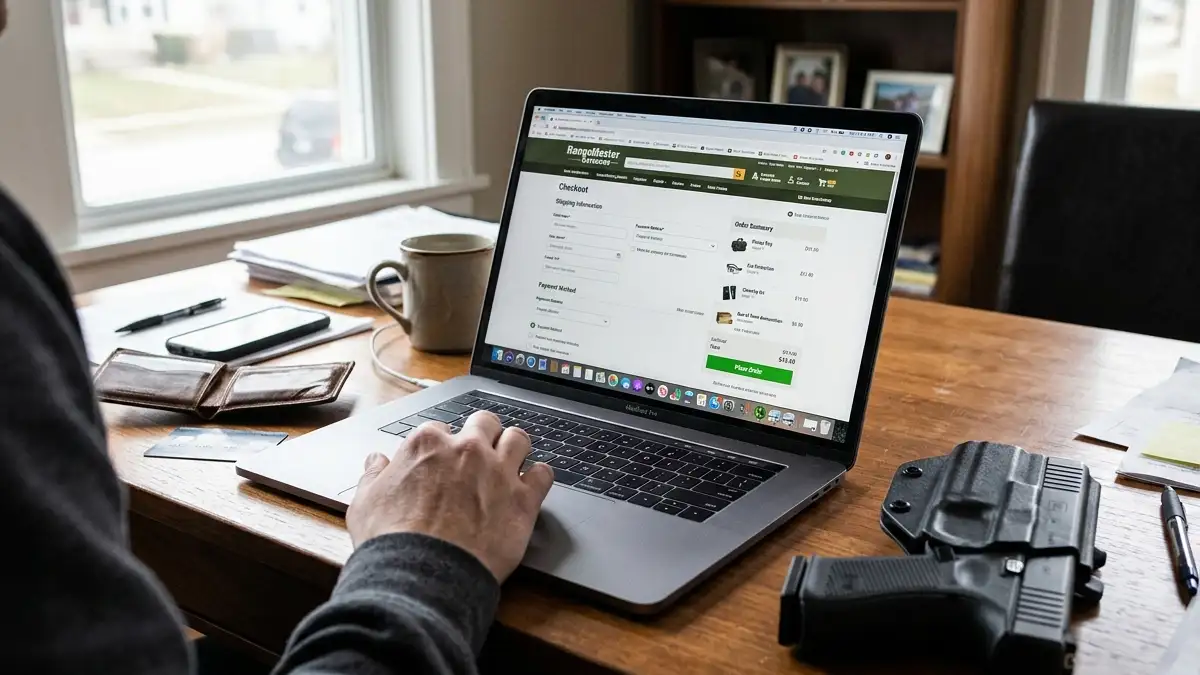
A firearm and a laptop sitting on a desk.
Credit: Adaptiv Payments


Tech Lead at Adaptiv Payments | More
Selling firearms legally depends on your jurisdiction, making it crucial to know both your state and federal laws. There may also be different requirements for selling on a website or selling in-person.
Not every payment processor works with the firearm industry, which is why many gun shops turn to specialized firearm payment processors and merchant accounts to ensure steady revenue.
Federal vs State vs Local Laws
The Gun Control Act requires background checks for dealers and potential buyers. Dealers must also have an FFL to sell or manufacture ammunition, firearms, or destructive devices.
State laws may be more restrictive. For example, they may require private sellers to have an FFL, have a longer list of prohibited persons who cannot sell guns, or place restrictions on transporting guns to other states.
Local laws generally involve zoning restrictions on where you can open a firearms business. It's your responsibility to know any relevant laws before starting your firearms sales. You may consider talking to a local FFL law firm for personalized advice.
Do You Need an FFL to Sell Firearms?
Unless you are a private seller who is selling a handgun or rifle to a friend, you will need an FFL license. There are multiple FFL types depending on what types of firearms you sell, whether you manufacture weapons, and whether you import and export.
To get an FFL license, you will need to fill out the ATF 7/7C form. Every responsible person must fill out the Appendix, provide photos and fingerprint cards, and complete an electronic background check. You'll also provide an application fee that will go toward your three-year license.
Once your application is processed, a local ATF representative will visit you for an in-person interview. The IOI will discuss relevant laws with you, including local laws around zoning, and inspect your premises. They'll look for the following factors:
- Documentation of all firearms to prevent illegal sales
- Anti-theft security measures
- Clear recordkeeping for all purchases, including checking permits and criminal records
- Proper forms and recordkeeping
Once you have your license, you'll need to undergo regular audits, including recordkeeping and security measures.
Selling Firearms In-Store vs Online
When starting an online gun store, you must know that you cannot ship a gun directly to the buyer. Online transactions require an in-person FFL transfer with a dealer as an intermediary. If you have a brick-and-mortar store, you can sell online and have customers pick it up in person.
You will ship to the local dealer or keep the firearm in-store. The buyer must personally pick up the gun from the local FFL dealer, where they will complete ATF Form 4473 and pass a NICS background check. This is to ensure that a prohibited person does not buy guns online to bypass the legal system.
If you have an online-only store, the local dealer will typically charge a small fee to facilitate the transaction, which the customer pays upon arrival.
Shipping and returns are different as well. If the customer decides not to purchase the weapon, you'll have the dealer ship it back to you at the customer's expense.
Every sale, whether online or in-store, must be documented. For online sales, you'll collect the NCIS check and ATF paperwork from the dealer for your own records, along with the dealing store's contact information.
Recordkeeping and Compliance
All sellers must keep a Firearms Acquisition & Disposition Record Book, also known as the A&D book. This document records all NCIS checks, used gun transfers, and inventory purchases, including whether the buyer used cash or a card. This is an essential legal document, and you must keep records for at least 20 years. The ATF prefers that A&D records be kept for life and sent to them upon your business's closure.
Inventory controls are part of your A&D book. To be audit-ready, you must have exact documentation for every firearm on your premises. These records must state when the weapon came into your possession, where you procured it, the make, model, and serial number.
Identity and age verification are also critical. Most dealers use NCIS to verify that purchasers can own a weapon and are of the correct age. You should include ID information in your A&D book.
Lastly, all firearms must be secured at all times, such as in a gun safe or with gun locks. You must have adequate security, like CCTV, automatic door locks, and security personnel. With these factors, you'll be prepared for scheduled or drop-in audits.
Common Legal Mistakes That Create Liability
Selling guns is highly regulated, and failure to follow local or state laws can cause major legal issues. Avoid these pitfalls to keep making money and staying compliant:
- Vague or Unverified Compliance: Your compliance reporting should be clear and defensible to the ATF or local administrators. Perform regular self-audits to ensure you're staying on top of your compliance.
- Poor Recordkeeping: The A&D book is the most important documentation in your store. Record every sale and address any issues, such as a mistyped ID number or a mismatched firearm model.
- Unclear Refund or Return Rules: Have clear refund and return policies on your website and available to all customers. This can prevent disputes and chargebacks that could damage your banking relationships.
- Poor Shipping or Transfer Workflows: Late orders, unclear communication with local dealers, or poor shipment tracking can all lead to poor documentation or unsatisfied customers. Develop a standardized workflow with inventory management triggers.
Why Payment Processing Is Harder for Gun Stores

A man making a gun purchase in-store.
Credit: Adaptiv Payments
Mainstream payment service providers (PSPs) often do not work with the firearms industry. For example, gun sales and PayPal accounts for other inventory must be kept separate, as selling firearms is prohibited on the platform.
Even with PSPs that do allow firearms, there are many reasons firearms merchant accounts get declined. This can include the high risk of fraud, illegal transactions, or frequent chargebacks. The patchwork of local and state regulations also makes it challenging for large PSPs to ensure compliance.
Firearm businesses are subject to greater underwriting scrutiny of their recordkeeping and security measures due to the high risk that guns can pose. Account providers will ask for FFL documentation, A&D books, employee NCIS checks, and more to protect themselves from regulatory issues.
A Compliant Payments Path for Firearms Businesses
A firearms merchant account and payment gateway allow you to smoothly process payments while remaining compliant with all regulations. These accounts include robust risk mitigation tools such as enhanced fraud prevention and chargeback mitigation, helping secure your cash flow and improve your reputation.
Adaptiv Payments is the leading provider of merchant accounts for high-risk businesses, providing a quality alternative to mainstream PSPs that often reject merchants in high-risk industries.
Our streamlined underwriting considers both your business growth potential and compliance. We'll consider your sales policies, catalog clarity, and fulfillment proof, along with standard documentation such as proof of your FFL compliance and business model.
You'll receive support from industry experts who understand the unique challenges that firearms dealing imposes on businesses. Our comprehensive services are designed to integrate with your existing workflows, including your POS systems and online payment portals.
See why thousands of companies trust Adaptiv Payments for seamless, convenient processing. Contact us today for a free quote and to learn how we can help your gun shop thrive in this highly competitive sector.
