Can You Sell Vitamins on Facebook Marketplace?
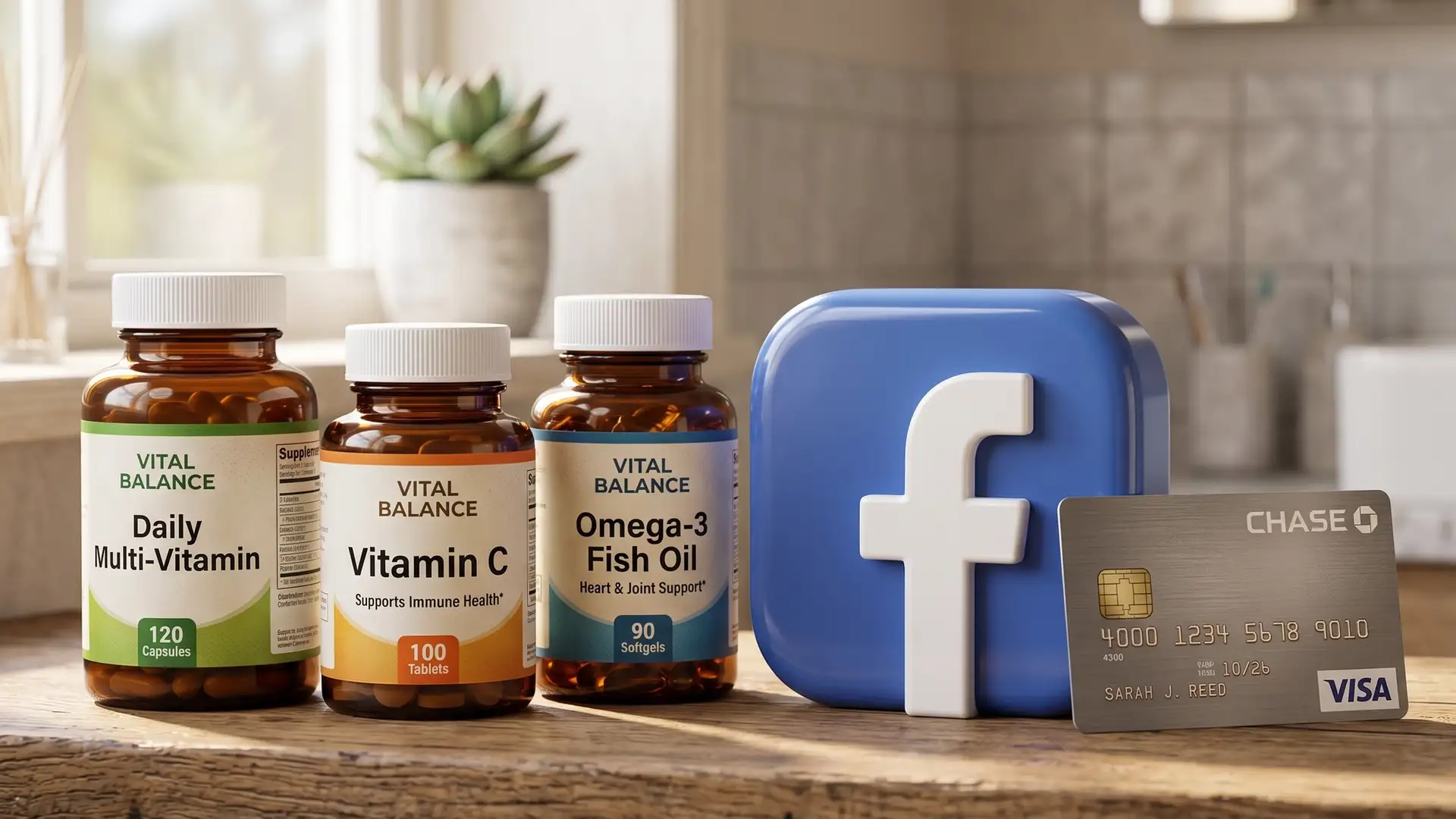
3d rendered vitamin bottles and the facebook logo with a credit card
Credit: Adaptiv Payments


Account Executive at Adaptiv Payments | More
When selling vitamins online, it's important to understand that every platform has its own restrictions and policies. Meta's commerce rules mean that ingestible health-related products can trigger moderation, account restriction, or listing removal. The rules are not precise, leading to potential misinterpretations even when following the guidelines.
Because of this, a better question is whether a specific channel gives your supplement business the stability it needs to operate successfully. Control over product details and post-sale interactions can make a significant difference in your brand's long-term success.
The Ins and Outs of Selling Supplements on Facebook
Before selling supplements online, it's important to understand the different products Facebook offers. While they all share a vast user base, they work differently.
- Facebook Business Page: A dedicated business page lets you drive traffic to your own website. You can create posts that focus on your product benefits. Any advertising will have to run through your page.
- Facebook Marketplace Listings: This open market works similarly to Craigslist and is often used by individual sellers. It is a policy-sensitive channel for vitamins, as Facebook's terms of service do not allow the sale of ingestible products here. Listings may face removal.
- Facebook Groups: These are small, curated forums where you can connect with potential customers.
- Facebook Shops and Other Commerce Surfaces: One of Meta's newest products, Facebook Shops allows you to open a storefront that is available across Facebook, Instagram, and other platforms.
- Ads: Buying ads can boost website traffic, especially if you promote upcoming discounts or limited-time offers.
Why Vitamin and Medical Product Listings Get Removed on Facebook Marketplace and Business Pages
As one of the largest social media companies in the world, Meta uses automated processes to identify unsafe supplements or other health-related products that may not align with its broader commerce framework.
Vague or incomplete product details may lead to category confusion around whether your product is ingestible or topical. Additionally, any listing language that sounds like a disease claim can lead to restriction.
Because the moderation systems apply broad rules to sensitive product types, it can be difficult to determine whether your products align with the policy. This does not mean that every product is banned, but it means that starting an online supplement store through Marketplace listings may result in negative consequences without helping you reach a broader audience.
Why Facebook Marketplace Is a Weak Selling Channel for Vitamins and Other Health Products
Though it is possible to sell supplements on Facebook, Marketplace is not an ideal option. There is less control over the full user journey, including how products are presented and described to potential buyers. As a result, sellers cannot educate users or build trust in their products.
The inconsistent listing stability and limited control mean that buyers may not understand what they're purchasing, such as whether it's ingestible and what formulation it uses.
A great supplement merchant needs firm control over the pre- and post-purchase experience, which is why other options, like a dedicated storefront, are more ideal.
What Do You Need to Sell Dietary Supplements Online

3d rendering of Facebook logo and a supplement bottle
Credit: Adaptiv Payments
The wellness industry is closely monitored to protect consumers. To stay compliant, you must maintain thorough documentation at each step of the process, from manufacturing to delivery. These include:
- Complete product details
- Ingredients and serving information
- Supplier or manufacturer records
- Testing and batch support, if relevant
- Shipping and refund terms
- Delivery records
- Support history for user complaints
Regardless of what channels you use, having this documentation on hand can prevent disputes and prove compliance.
What Are the Best Channels to Sell Vitamins Online
Any channel you use should prioritize seller control. You should be able to customize product information, policy visibility, and checkout pages. Support workflows and customer communication should be customizable to meet your specific needs. These are some of the most stable options.
- Your Own Ecommerce Site: This is the ideal solution, as it gives you complete autonomy at each step of the process.
- Selling vitamins and supplements on Shopify: Shopify storefronts are highly customizable. You can upload images, choose your checkout options, and accept payments in different currencies. However, you may need a different payment processor.
- Controlled Brand Environments: The brand should allow you to manage product education, policies, support, and checkout so that your messaging stays consistent across all formats.
- Selected Selling Channels: Other channels may have clearer rules and better control over product details than Facebook, allowing you to build a personal relationship with your audience.
What Payment Setup Should Vitamin Sellers Think About Once They Move Off Marketplace?
A more stable selling environment should be paired with realistic payment options, including specialized supplement merchant accounts. If you choose to move to your own store, you'll need to make hard decisions about payment processing and checkout options, as you no longer have the integrated Facebook payments system.
Not every processor treats vitamins and dietary supplements the same way. They may have specific underwriting requirements or significantly limit their exposure to this industry. Claims styles, subscription decisions, refund practices, and product categories all affect whether you are approved, because they introduce different types of risk.
A better payment infrastructure eases friction and allows you to educate users at every step, which can limit disputes and help you maintain a clear record.
Adaptiv Payments offers quality high-risk payment processing for supplements. Informed by supplement industry expertise, we consider your entire business model and carefully investigate all aspects before approving your account. Advanced fraud protection and chargeback mitigation help you save money while preserving your reputation with your audience.
If you're ready to sell supplements with a specialized merchant account, we're here to help. Contact us for a free quote and more information about how we help merchants transition away from selling supplements on Facebook.
