Travel Industry Chargeback Protection
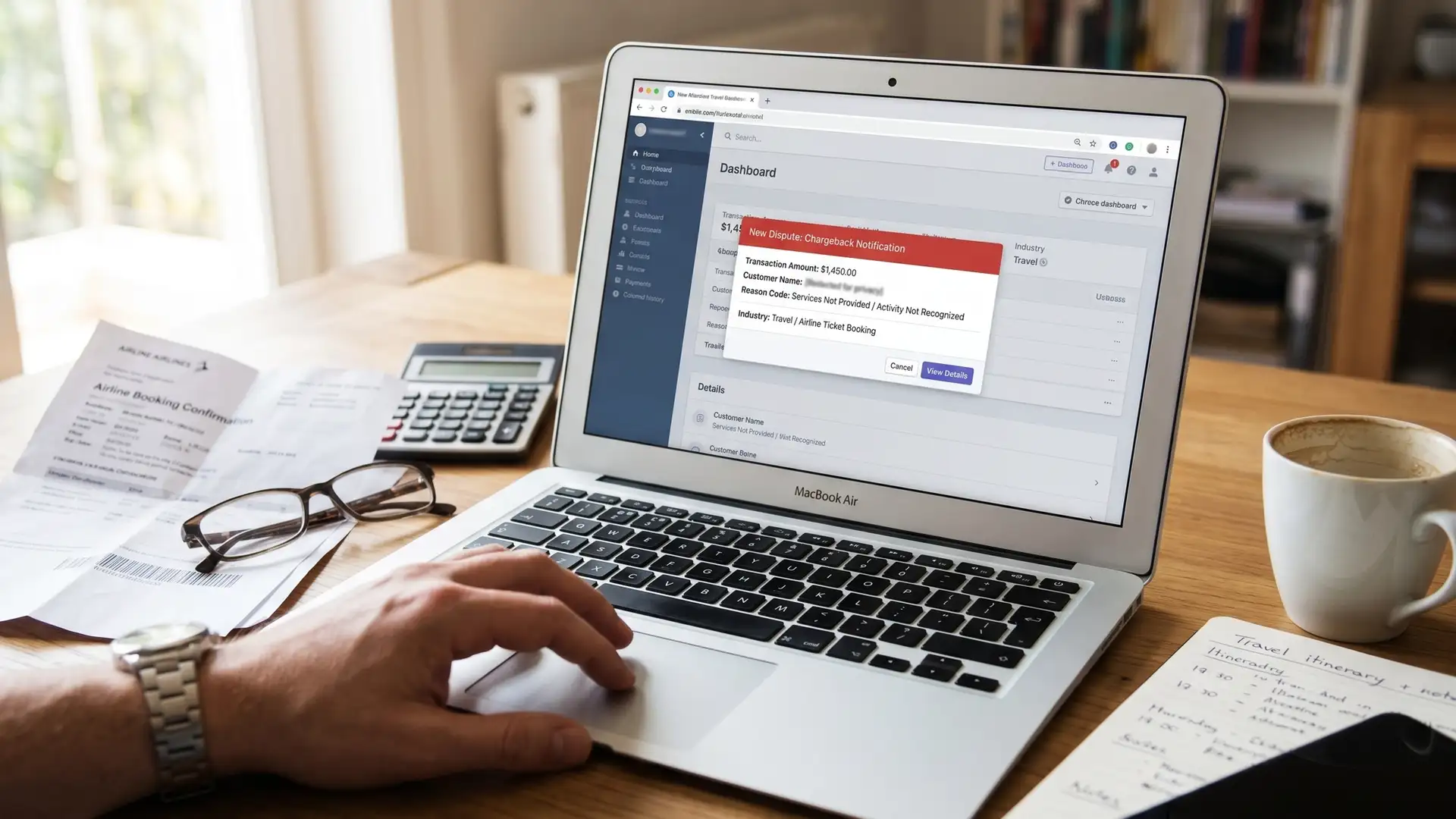
Travel industry chargeback prompt on a laptop
Credit: Adaptiv Payments


Tech Lead at Adaptiv Payments | More
Chargeback statistics show that the travel industry maintains some of the highest chargeback rates across all sectors. Travel industry chargeback protection reduces these costly disputes, prevents illegitimate chargebacks, and ensures you recover lost revenue in a timely manner.
Why Travel Businesses See More Chargebacks Than Many Other Merchants
Travel is considered a high-risk industry due to very high chargeback ratios and frequent customer disputes. These occur in the travel and hospitality industry due to the structure and nature of the transactions.
- Delayed Fulfillment: For highly popular destinations, customers might have to book months in advance. Whether due to unexpected life events or simply forgetting they booked a package, a lot can change between buying the ticket and boarding the plane.
- High-Ticket Purchases: Travel packages or plane tickets can cost thousands of dollars, which can lead to a chargeback dispute if the customer runs into financial issues.
- Cross-Border Bookings: Delayed visas, geopolitical disputes, or unexpected advisories can force changes to travel plans.
- Multiple Fulfillment Parties: A vacation requires services from numerous vendors, and if one of them provides subpar service or encounters challenges, the chargeback may land on you instead.
- Seasonal Surges: When thousands of people visit the same destination in a short period of time, there may be issues with the trip outside your control that result in a chargeback, such as hotel overbookings or being bumped from a flight.
- Cancellations and Rebookings: Customers may need to change their travel dates and dispute a non-refundable deposit. On the other hand, they may rebook and then try to cancel their original booking, only to find that the refund date has passed.
- Emotional Purchases with Limited-Time Plans: Special trips, like vacations, music festivals, or other events, depend on each part of the customer experience working well. Dissatisfaction can result in chargebacks even if services were rendered.
The Most Common Travel Chargeback Reasons
While chargebacks may be illegitimate disputes, they are not always true criminal fraud. Instead, they are due to disappointment, policy issues, or simple forgetfulness that snowballs into a bank dispute.
“Services Not Received”
Travel products often have a long gap between booking and consumption. Customers may forget the charges, such as when they were comparing service providers and accidentally paid two different providers. Plans could change, or the card may be replaced before it is charged. Disputes are often easier to file when the service date is far away from the transaction date.
Unauthorized Transaction Claims
These may occur when the actual cardholder was not the one who made the booking. This doesn't necessarily mean fraud or a stolen card. Instead, it could be a family member or loved one who used the card without permission to book a trip for themselves.
Cancellation Fee Disputes
Customers may fail to read the fine print in your cancellation policies and believe they can cancel up to the booking date, unaware that the cancellation period has passed.
Unrecognized Billing Descriptors
Payment receipts should clearly state the charge and business name, as otherwise, customers may think a significant charge was unauthorized. For example, they may not recognize your payment processor's name and assume their card was stolen.
Supplier or Itinerary Changes
Vacation packages sometimes must change dates or use different suppliers than what was originally described, resulting in customer dissatisfaction.
“Not as Described”
A customer might get frustrated when a trip falls short of their expectations and, instead of requesting resolution through the business owner, will dispute the charge with their bank.
Friendly Fraud
These occur when the customer went on the trip and received service, but then disputed the charge anyway, such as realizing that they had not budgeted properly or ran into financial difficulties.
How to Minimize Chargeback Risk
There are several ways to reduce chargebacks in travel payments, most of which revolve around setting clear expectations and communicating proactively with your customers.
Set Clear Refund and Cancellation Policies
To dispute a chargeback, you'll need to submit evidence that the customer agreed to your terms. Ensure your checkout process clearly outlines your refund and cancellation policies, and that you provide this information in multiple formats for your customers.
Have visible cancellation windows, deposit rules, and change fees on the scheduler where customers pick their dates. If certain elements are nonrefundable, ensure customers must acknowledge this before they check out.
The checkout acknowledgment should again list the terms, which should be restated in a confirmation email. Collect time-stamped proof that the customer accepted the terms of service.
Use Recognizable Billing Descriptors
"I don't recognize this charge" is a very common dispute in the travel sector that occurs when the booking brand, legal entity, and supplier name don't match the card issuer's statement.
Set up your billing descriptors to match your booking brand, and include customer service details if possible.
Reservation identifiers can boost your win rates because the issuer will see that the charge matches the communication records provided to the customer. A detailed descriptor that identifies the property, reservation numbers, or confirmation numbers can eliminate complaints of an unknown charge.
Keep Strong Booking and Delivery Records
Your store records are the most valuable evidence against a dispute. Keep meticulous records of all communications related to each transaction, including:
- Booking confirmation
- Itinerary details
- Policy acceptance records
- Payment timestamps
- Emails and SMS confirmations
- Refund or change requests
- IP or device data
To prove the delivery of services, you should keep records of proof of issuance, check-in, stays, attendance, or other evidence.
Send Automated Traveler Communications at Key Moments
Regular messages can reduce confusion and create a service-delivery trail. It also provides customers with a way to contact you and resolve issues other than filing a dispute.
Send emails with booking confirmations and pre-travel reminders. When customers change their itineraries or other details, send a follow-up reminder.
Post-trip customer service is also important. Send customers a follow-up with a quick survey and encourage them to reach out if they have any concerns.
Use Credit Card Fraud Prevention Strategically
While fraud protection won't prevent disputes from occurring, it can help you maintain a healthy chargeback rate by resolving cardholder-authentication issues.
Always use a payment gateway with 3DS, which performs a risk check and issues challenges when there are issues such as a sudden change in IP or device location. 3D Secure works alongside traditional tools such as Address Verification System (AVS) and Card Verification Value (CVV) to ensure charges are authorized.
The Address Verification System (AVS) verifies that the customer's billing address matches the one on file with the issuer. An AVS mismatch doesn't always mean fraud, but it can require a step-up challenge.
Card Verification Value (CVV) is essential for card-not-present transactions like online travel bookings, as it requires the customer to input the CVV.
Together, these can verify transactions and ensure only verified bookings are approved.
Offer Lower-Dispute Payment Methods Where Appropriate
While there are many ways travel agents can process payments, some are more dispute-prone than others, like credit cards. Alternative payment methods like bank transfers, ACH, and digital wallets will not entirely eliminate risks, but they can diversify your exposure and reduce reliance on the most easily disputed payment rail.
The choice between using ACH vs wire transfer depends on how large the transaction is and the risk of a chargeback. Wire transfers are typically irretrievable, making them a good choice for someone starting a home-based travel agency with high average order values.
ACH transfers can be reversed, but are less likely to be disputed. However, there are downsides to using e-checks, such as the time that they take to clear. Digital wallets are also a good option that has lower dispute rates.
Encourage Travel Insurance for Disruption-Heavy Bookings
Travel insurance is a critical component of embedded sales in the travel industry, providing reimbursements beyond the issuing bank. Customers whose trips are disrupted by illness, delays, or weather can receive all or some of their money back without opening a dispute. This also keeps your chargeback ratio low while still providing value to customers.
Improve the Booking Process for Seasonal Dispute Spikes
Chargeback mitigation becomes more challenging during seasonal spikes. High transaction volumes and understaffing mean having to provide customer service in multiple languages while navigating different issuers' evidence rules.
This is why travel companies often use specialized payment processing for high-volume businesses that can handle these influxes. By managing many of the administrative tasks, these processors leave time for your staff to connect with customers and resolve issues before they are escalated.
Travel Merchant Accounts With Strong Chargeback Management
Adaptiv Payments offers tailored merchant accounts for businesses in the travel industry, with thorough underwriting and risk assessment to ensure uninterrupted service. With our help, you can focus on giving your customers top-notch service and unforgettable experiences.
Our high-risk industry payment processing solutions include advanced fraud protection to detect issues such as AVS mismatches and suspicious activity. Most importantly, we provide international service so customers can book with you from anywhere in the world. Real-time chargeback management tools help you identify friendly fraud or other issues as soon as possible, giving you a better chance of winning.
We have helped hundreds of businesses across numerous high-risk industries protect their banking relationships and prioritize exceptional customer service through competitively priced, tailored merchant accounts. Contact us today for a free quote.
