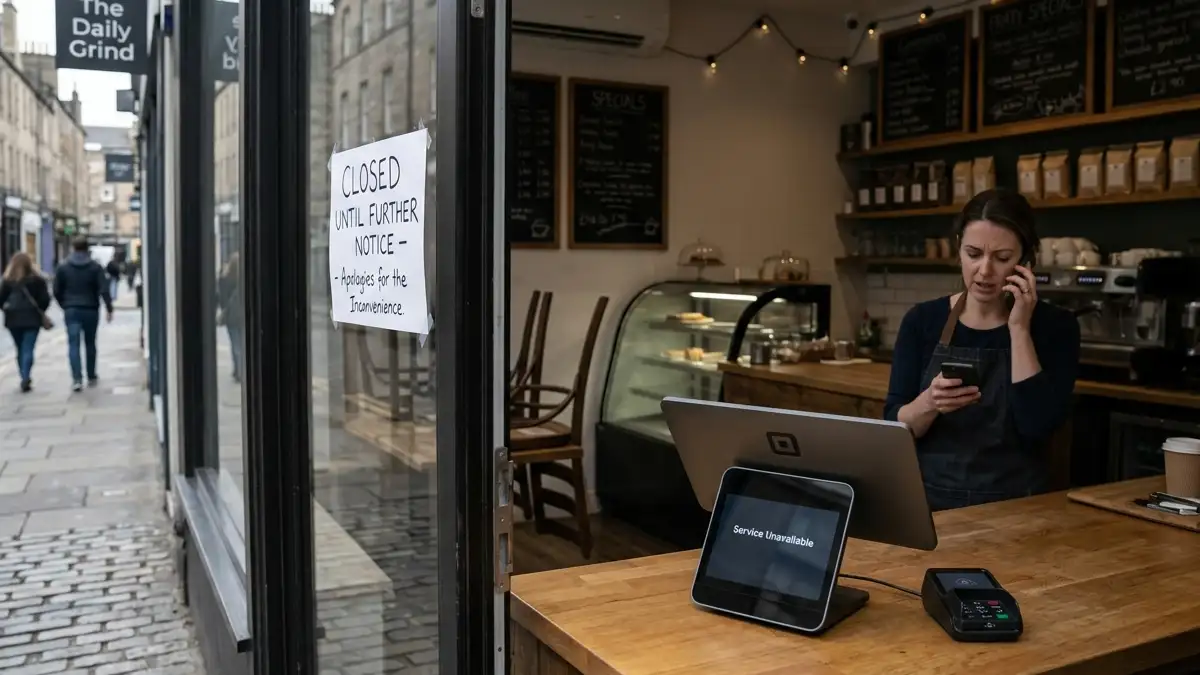
What Are High-Risk Businesses?

A person sitting at a desk with a laptop running a high-risk business
Credit: Adaptiv Payments


Director of Sales at Adaptiv Payments | More
A high-risk category is a classification that financial institutions use to manage their risk exposure, not a moral judgment on a company's business operations. Certain signals, including high dispute rates, frequent refunds, delayed fulfillment, heavily regulated products, or complex legal restrictions, will make a business high-risk.
For businesses considered high risk, merchant account providers and payment processors will perform more thorough underwriting and monitor transactions more closely. They may also charge higher processing fees and require larger reserves.
What Does “High Risk” Mean in Payment Processing?
High risk means that there is a higher financial or reputational risk to the banking service. These losses may come from compliance issues, costly dispute management, or potential fraud. In some cases, it may also be due to financial instability or a poor credit history.
Traditional banks and other financial institutions are more cautious about underwriting a business that is labeled high risk due to the potential losses from chargebacks, refunds, or fraud. They also recognize that some verticals, such as online gambling, are subject to greater regulatory scrutiny and require greater oversight.
Different processors use different high-risk labels or underwriting processes, but the drivers are similar across most institutions.
The Signals That Trigger a High-Risk Classification
Chargebacks and Disputes
High chargeback rates or frequent disputes can suggest that the merchant cannot fulfill orders successfully.
Underwriters will examine dispute ratio trends and reason patterns to identify trends. They will also review customer support history to assess whether complaints are being handled properly.
Merchants can reduce chargeback rates by improving the cancellation page and using dispute monitoring along with chargeback prevention tools. For disputes, proof of delivery and clear product descriptions can reduce complaints.
Refund Rates and Cancellation Behavior
High refund rates and frequent cancellations can lead to a high-risk label, even for businesses in low-risk industries. Underwriters will check refund frequency, trial offer patterns, and customer complaints to determine if there are any deceptive business practices.
To reduce these risk signals, develop clear policies and transparent billing practices. Provide proactive customer support, especially in industries like online gaming, where friendly fraud is common.
Delayed Fulfillment and Proof of Delivery
Some high-risk industries routinely delay fulfillment, such as for individual commissions or bespoke orders. Others may have poor inventory management and may not offer proof of delivery, leading to complaints.
Underwriters will assess whether your fulfillment timelines would be considered high-risk based on your business vertical. They'll also check your shipping practices and evidence readiness, such as tracking.
You can improve these risk signals by offering package tracking, delivery confirmation, and clear lead times, especially for custom products.
Regulated or Restricted Products and Services
Certain MMC codes are considered high risk because they have strict regulatory guidelines, like age verification or limitations on product claims.
Underwriters will look at your category or MCC, then examine your compliance documentation. They will also look at your website content and ensure there are no prohibited claims.
Clear catalog definitions and marketing language can improve your risk profile. Always keep any required documentation, like Certificates of Analysis or A&D records, readily available.
Cross-Border and International Risk
Cross-border sales can be high-risk, especially for certain countries with known fraud behavior. Capture can also be more difficult across borders, even for legitimate sales.
Underwriters will assess your percentage of international sales, accepted currencies, and fraud/decline rates. They'll also assess the costs of returns or refunds and may charge higher fees.
An international merchant account can reduce these issues through localized checkout and fraud controls. Providing clear shipping and return policies can also reduce risk.
High Risk Industries vs High Risk Behavior
While the main question is "what are high-risk businesses?" the answer is that there are two types: high-risk industries and high-risk behavior.
High-risk industries are in a category with inherently higher exposure than some financial institutions will accept. For other businesses, high risk comes from behaviors like dispute rates, misleading offers, or slow fulfillment. Businesses can reduce behavior risk regardless of their industry, which can improve merchant account acceptance.
Examples of High-Risk Businesses
These are common types of high-risk businesses:
- Alcohol
- Auto
- Beauty
- Casino
- CBD
- Coaching
- Consulting
- Credit Repair
- Debt Collection
- Ecommerce
- Events
- Fantasy Sports
- Fintech
- Firearms
- Gambling
- Gaming
- Gym
- High Volume
- International
- Kratom
- Logistics
- MLM
- Marijuana
- Medical Billing
- Online Dating
- Pawn Shop
- Pharmacy
- Precious Metals
- SaaS
- SEO/SEM
- Smoke Shop
- Sports Betting
- Subscription
- Supplement
- Tech Support
- Telehealth
- Timeshare
- Tobacco
- Travel
- Nutraceuticals
- Vape / E-Cig
We provide specialized merchant accounts that address the unique needs of companies in these sectors, including advanced fraud detection and chargeback mitigation.
What Changes for High-Risk Merchant Accounts
Merchant accounts for high-risk businesses differ slightly from standard merchant accounts, particularly in terms of underwriting depth and payout times.
| Standard Merchant Account | High-Risk Merchant Account | |
|---|---|---|
| Underwriting depth | May primarily look at processing history and credit score | Business documentation, site review, and processing history to assess risk level |
| Reserves or holds | Minimal reserves and may not require holds | Reserves held to protect the service provider in case of default; may be 90-180 days |
| Pricing or Fees | Standard fees are provided to all businesses | Risk-based pricing that may be higher than standard account |
| Monitoring | May only be monitored after a spike in complaints | Ongoing reviews, dispute thresholds, and regulatory reviews |
| Payout Timelines | Within a few business days | May vary depending on risk |
What Underwriters Typically Ask For (Approval Readiness Checklist)
When applying for a merchant account and high-risk payment gateway, underwriters will check these key details.
- Business Documentation: Provide your EIN, tax ID, and articles of incorporation.
- Banking History: Show bank statements and processing history.
- Products and Services: Underwriters will check for catalog and category accuracy.
- Website Review: Underwriters will review your refund, shipping, and cancellation policies. Have contact information available for customers.
- Fulfillment Workflow: Inventory management and a clear workflow are essential.
- Customer Support: Underwriters may review response times and support documentation.
- Risk Controls: The underwriter will review your current fraud screening and dispute handling plan.
- Regulatory Needs: The underwriter will also verify regulatory compliance, depending on your specific industry. For example, they may need to look at COAs for a CBD company.
The underwriter will then complete a risk assessment to determine your terms and conditions. If you are approved, you'll gain access to advanced fraud protection, real-time chargeback prevention, and multi-currency support.
FAQs
Other than being able to process credit card payments, businesses in high-risk industries should consider these tools:
- Advanced chargeback management
- Integrated fraud protection, such as PCI-DSS-compliant security measures
- Load balancing and payment routing to avoid account freezes
- Dedicated high-risk account to prevent sudden account termination
- Subscription and recurring billing models
- Diversified payment rails, such as ACH, cryptocurrency, or online payment platforms
Artificial intelligence, device fingerprinting, and adaptive behavioral analytics will reduce potential fraud without lowering approvals. This is especially valuable if you accept payments from high-risk countries because it considers individual user behavior rather than automatically blocking payments.
A limited processing history means institutions cannot confirm the business's ability to fulfill orders or maintain financial stability. Having a proven track record of processing payments indicates lower risk.
Regulations that are more likely to result in high-risk classification include:
- Know Your Customer (KYC) laws, like for money transfer services
- Anti-Money Laundering (AML) laws, as for the gambling industry
- Age restrictions, such as for adult entertainment
- Shifting regulations and varied legality, like for firearms and CBD
- High chargebacks, like for travel and timeshares
The Best Payment Processing Services for High-Risk Businesses
Adaptiv Payments is a leading high-risk payment processor thanks to our competitive rates, seamless integration, and industry experience. We offer tailored solutions for businesses considered high risk by traditional financial institutions, enabling them to accept a variety of payment rails across multiple platforms. Our industry experts understand the unique challenges of your field and will work with you to customize a solution that matches your business model.
Contact us today to learn more about our high-risk merchant accounts made to meet your specific needs.