Merchant Account
Also known as: credit card merchant account, card processing account, merchant processing account
Definition
A merchant account is a commercial account at an acquiring bank that lets a business accept credit and debit card payments and receive the resulting settlement funds.
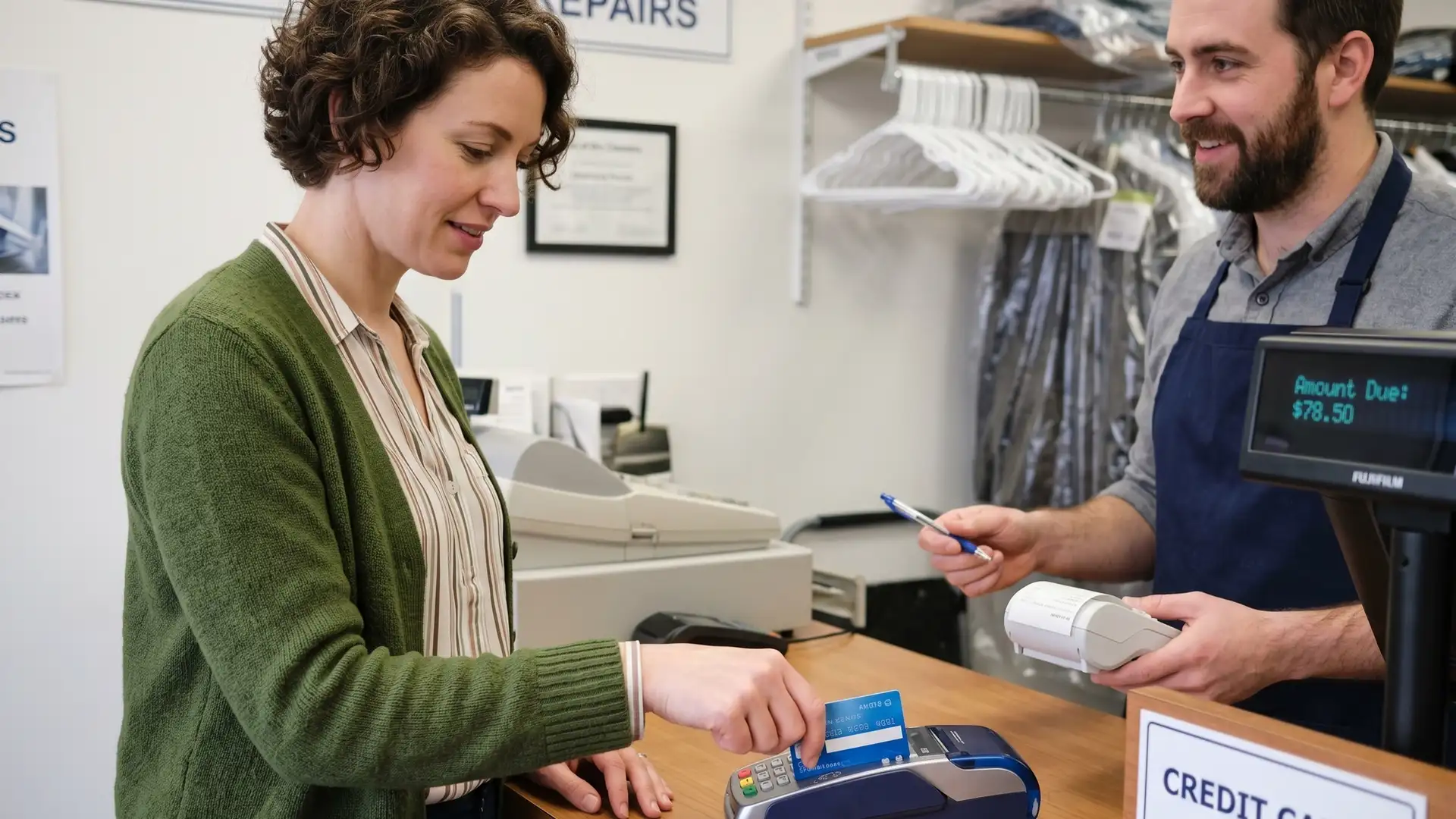
Someone using a credit card to pay for a service.
Credit: Adaptiv Payments
How it works
A merchant account connects three different parties: the merchant, the acquiring bank who holds the account, and the card networks (Like Visa, Mastercard, Discover, and American Express). When a customer pays, the acquirer fronts the funds and later collects from the issuing bank. The acquirer takes ownership of the transaction risk in, while in exchange takes fees and has the ability to take contractual recourse against the merchant.
Why it matters for high-risk merchants
For regular (low-risk) merchants the account is mostly invisible. You open one, plug in a gateway, and you can get paid the next day. High-risk merchants have a harder path to getting a merchant account. Underwriting can take 1 to 4 weeks instead of minutes. Approved accounts often carry 4% to 8% effective rates instead of the 2.9% baseline. Most accounts also include a rolling reserve of 5% to 15% held for 6 to 12 months to offset the risks of chargebacks and refunds.
Examples
- Dedicated merchant account at a sponsor bank (most stable, typically required for high-risk verticals).
- Aggregated account through Stripe, Square, or PayPal (fast onboarding, weak fit for high-risk verticals).
- ISO or MSP-resold account at a sponsor bank (the format most processors actually sell).
- Sub-merchant arrangement under a payment facilitator (Mastercard caps these at under $1M annual volume before the sub-merchant must hold its own account).
Common pitfalls
- Treating a Stripe or Square account as equivalent to a dedicated merchant account. Aggregators reserve the right to suspend or off-board without warning when risk patterns shift.
- Underestimating the cash flow impact of a rolling reserve. A 10% reserve held for 6 months ties up roughly 5% of annual revenue at any given time.
- Triggering placement on the Mastercard MATCH list after a termination for cause, which blocks future merchant accounts across participating acquirers for five years.
External references
Frequently asked questions
A merchant account holds the funds; a payment gateway routes the transaction data to the acquirer. You need both to accept cards online. Some processors bundle them so the distinction is invisible at signup.
About the Author


Expert Payment Writer at Adaptiv Payments
Phil Stevenson isn't just a payment processing expert, he's a payment technology evangelist. For 15 years, he's been at the forefront of the industry, diving deep into emerging trends like blockchain, tokenization, and AI-powered fraud detection. He translates complex tech jargon into actionable strategies, empowering businesses to leverage the latest innovations for a competitive edge. He's not just keeping up with the future of payments, he's actively building it.
Reviewed by Luke Deviney— Tech Lead at Adaptiv Payments·Last updated