Hemp Merchant Accounts After the THC Ban: What You Can Still Sell and Process
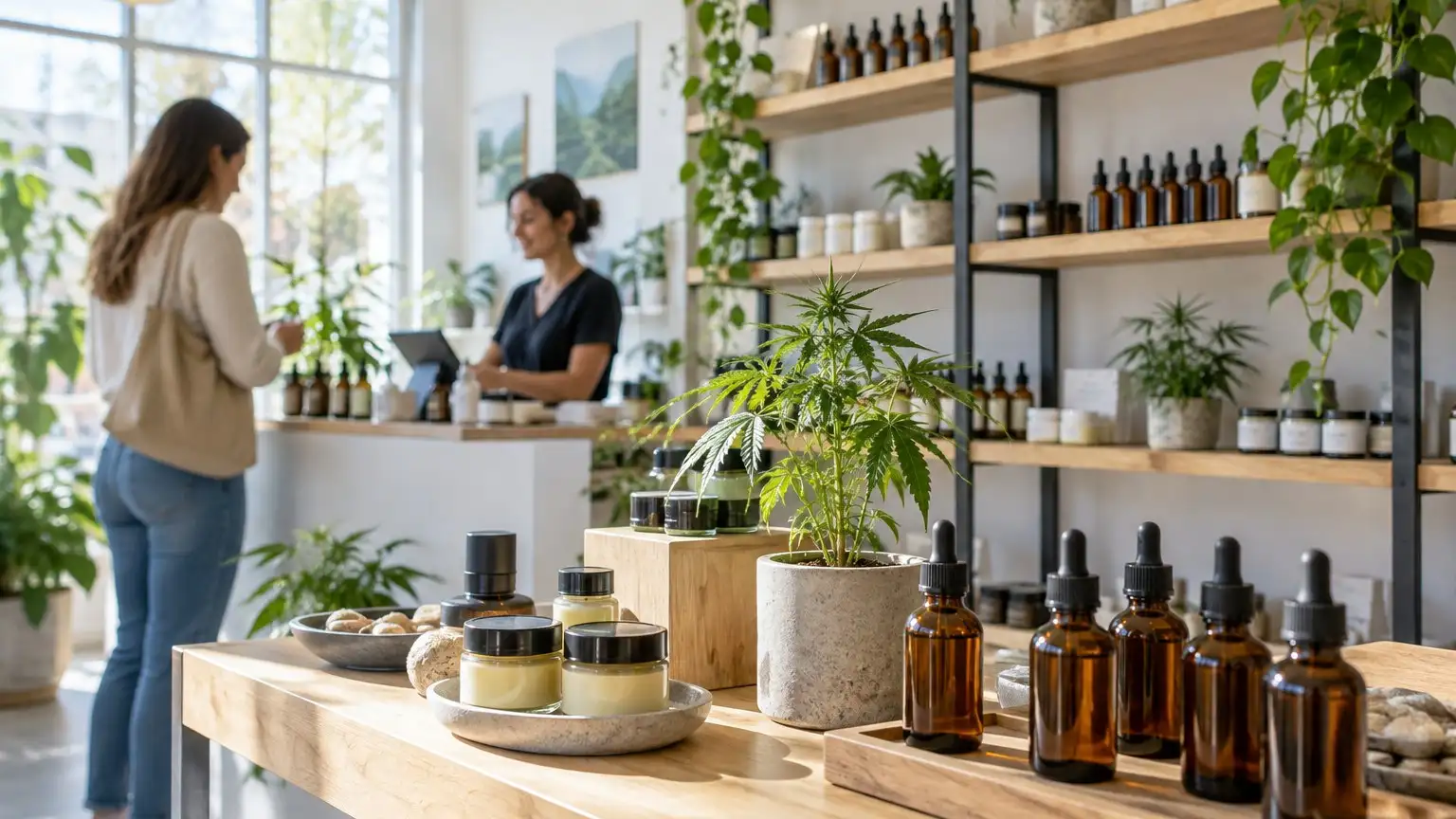
Shelves of CBD tinctures and balms in a bright wellness shop


Tech Lead at Adaptiv Payments | More
We set up merchant accounts for CBD and hemp businesses, and since Square told its CBD sellers to leave, dozens of former Square sellers have asked us the same question: will I still be able to accept payments by card after the hemp THC ban? For most CBD and hemp businesses the answer is yes, but only for the products that still count as hemp under federal law. Anything that falls outside the new definition is treated as marijuana, and no card network will process it.
The change arrives in two steps. On November 12, 2026, products with cannabinoids the plant can't make on its own lose hemp status. On December 11, 2026, the rest of the new definition takes effect, including the 0.4 mg total THC per container cap. Here's what changes on each date, what you can still sell, and what underwriters check to approve or keep a hemp merchant account.
Is hemp going to be banned in 2026?
Not all of it. Industrial hemp and non-intoxicating, hemp-derived CBD stay legal. What ends is the market for intoxicating hemp: delta 8, THCA flower, hemp-derived delta 9 edibles and drinks, and products made with synthesized cannabinoids.
Here's how it happened:
- November 12, 2025. Congress passed H.R. 5371, the funding bill that ended the government shutdown. It became Public Law 119-37, and Section 781 of Division B rewrote the federal definition of hemp, effective one year later.
- Early September 2026. A stopgap funding law, the Continuing Appropriations and Extensions Act, 2027 (P.L. 119-103), pushed most of the change back to December 11, 2026, according to the Congressional Research Service. It did not delay the rule for cannabinoids that can't occur naturally.
- December 11, 2026. Everything else in the new definition takes effect. That's also the day the current federal funding runs out, so watch the next funding bill.
Bills to delay the change by two years, repeal it, raise the THC limit to 1% or create a federal framework for hemp products are pending, but none has passed as of October 20, 2026. In a June 2026 statement on the House agriculture spending bill, the White House asked Congress to at least update the definition so full-spectrum CBD products survive. That hasn't happened yet either. Plan for December 11.
What the new hemp definition bans
Under the new definition, hemp still means the cannabis plant and its derivatives with no more than 0.3% THC by dry weight, but the details change in ways that matter to every hemp business:
- Total THC, not just delta 9. The 0.3% limit now counts THCA and every other form of THC. Most THCA flower fails this test.
- No synthesized cannabinoids. Cannabinoids made or converted outside the plant don't count as hemp, even if the plant could produce them. That covers delta 8 made from CBD, along with HHC and similar products.
- No unnatural cannabinoids. Cannabinoids the plant can't produce at all lose hemp status first, on November 12.
- A 0.4 mg cap per container. Final hemp derived products can't contain more than 0.4 mg combined of total THC and cannabinoids with similar effects per container. "Container" means the innermost package in direct contact with the product.
- Limits on intermediate products. Extracts and other products not in final form can't exceed 0.3% combined total THC and similar cannabinoids.
The FDA was supposed to publish lists of naturally occurring cannabinoids and THC-like cannabinoids, plus more detail on "container," by February 2026. According to CRS, it still hadn't as of late September 2026, so some edge cases remain unclear. Ask your counsel about any product that isn't plain CBD.
Hemp THC ban timeline at a glance
| Date | What happens | Products affected |
|---|---|---|
| November 12, 2025 | P.L. 119-37 signed; new hemp definition set to start in one year | None yet |
| October 15, 2026 | Square stops allowing CBD and hemp-derived items | All CBD and hemp sold through Square |
| November 12, 2026 | Cannabinoids not capable of natural production lose hemp status | Synthetic cannabinoids |
| December 11, 2026 | Total THC standard, synthesized-cannabinoid exclusion and 0.4 mg per container cap take effect | Delta 8, THCA flower, hemp delta 9 edibles and drinks, most full-spectrum CBD |

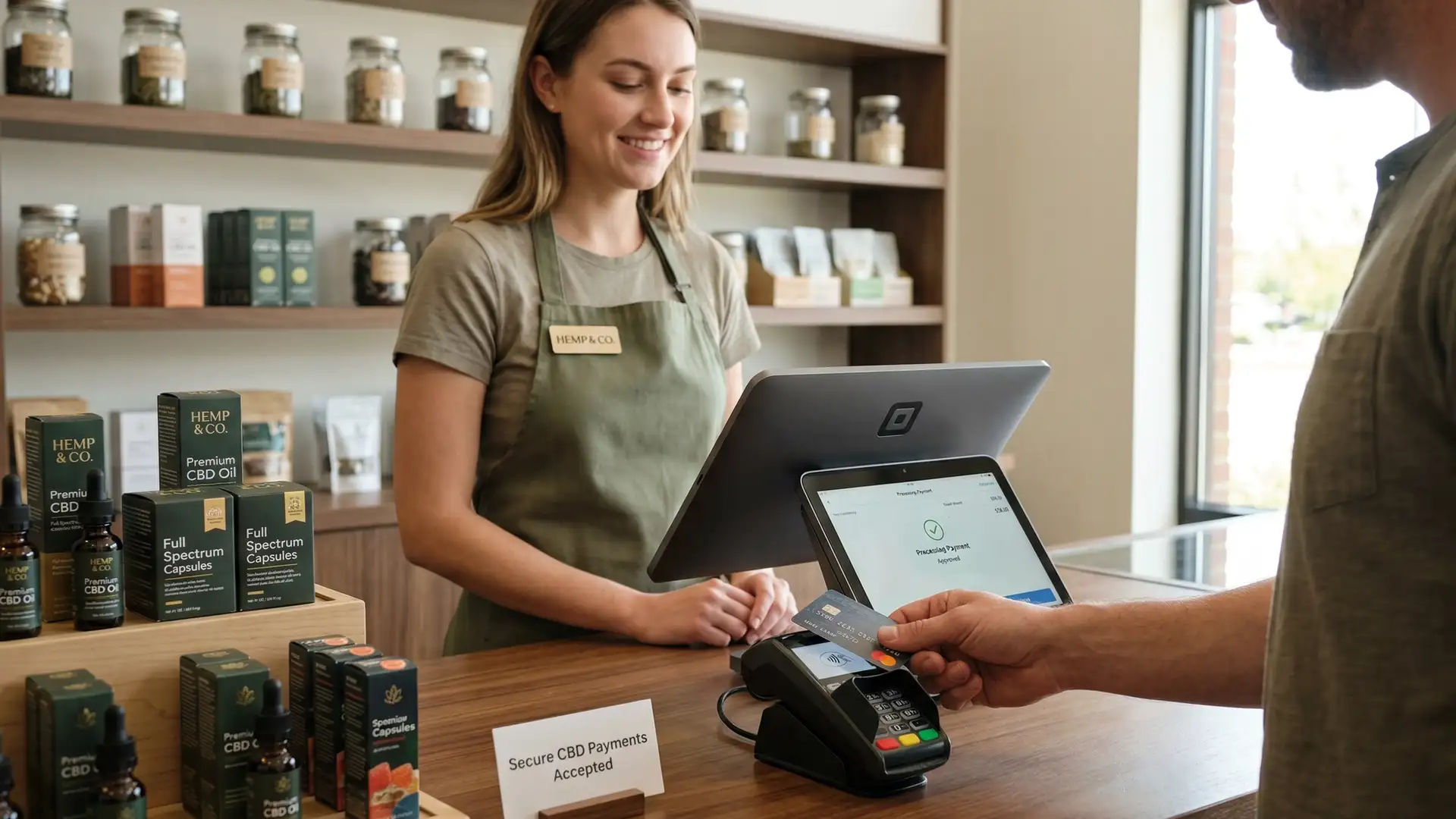
A CBD shop counter with tincture bottles, a card terminal and a certificate of analysis
Credit: Adaptiv Payments
What you can still sell and process after December 11
Card networks follow federal law. Visa and Mastercard already prohibit marijuana sales, and a product that falls outside the hemp definition is treated as marijuana under the Controlled Substances Act. So the products in your catalog decide whether you can keep taking cards.
| Product | Status after December 11, 2026 | Card processing |
|---|---|---|
| CBD isolate products (CBD oil, gummies, topicals) at or under 0.4 mg total THC per container | Still hemp | Yes, through a CBD merchant account |
| Broad-spectrum CBD with non-detectable THC | Still hemp if under the cap | Yes, with batch-level COAs |
| Full-spectrum CBD | Most products exceed 0.4 mg per container | No, unless reformulated |
| Industrial hemp (fiber, seed, grain, hemp seed oil, hempcrete) | Still hemp | Yes, usually standard risk |
| Delta 8, HHC and other converted cannabinoids | Not hemp | No |
| THCA flower, pre-rolls and vapes | Not hemp | No |
| Hemp-derived delta 9 edibles and beverages | Not hemp | No |
| CBD pet products under the cap | Still hemp | Yes, with COAs |
A note on full-spectrum CBD: a tincture at 0.3% THC by weight can hold far more than 0.4 mg of THC in one bottle. Industry groups estimate most full-spectrum products will fall outside the definition, so check your COAs against the per-container math, not the percentage.
What about the April 2026 rescheduling? The DEA's order, effective April 22, 2026, moved FDA-approved marijuana drugs and state-licensed medical marijuana to Schedule III. It doesn't cover hemp, and it doesn't cover synthetic THC. A delta 8 or THCA product that loses hemp status on December 11 is not covered by that order.
If you sell THC products in a state with a licensed cannabis market, the products themselves have to move into that market, which runs on ACH and pay-by-bank rather than cards. We cover the delta 8 side of this in detail in our delta 8 merchant account guide.
Which CBD payment processors still accept CBD and hemp payments?
The CBD industry has always been a high risk industry for banks, and most mainstream platforms were already cautious with CBD or hemp sales. The hemp redefinition pushed several of them out entirely.
- Square told merchants to remove CBD, hemp and hemp-derived items from their catalogs by October 15, 2026, according to Marijuana Moment. Accounts stay open for other products.
- Stripe lists CBD with only negligible THC as a restricted business, which means it needs Stripe's approval, and prohibits CBD above the local legal THC limit, including edibles. An account that's approved can still be reviewed and closed later. More on that in does Stripe accept CBD payments.
- PayPal doesn't support CBD sales. We break down why in our PayPal CBD guide.
- Shopify Payments can't be used for CBD. You can still sell on Shopify with a third-party gateway, covered in can I sell CBD on Shopify.
That leaves CBD payment processing through a dedicated high-risk CBD merchant account, with an acquiring bank that knowingly underwrites hemp. When we place a CBD seller, we send the bank the full product list with lab reports for each one, so the bank has approved the products before the first sale instead of finding them later. Compare your options in our roundup of the best CBD merchant account providers.
What happens to your current merchant account
If you’re with a high-risk acquirer that already knows you sell CBD, we expect a product review asking you to confirm which of your products are still legal under the new rules before December 11. Banks that process high risk transactions for CBD and hemp merchants are checking catalogs now. Here’s what we’re seeing underwriters ask our merchants for, starting with current certificates of analysis for every product:
- Ask for an updated product list. Many acquirers want a SKU-level catalog showing every product and its total THC per container.
- Pull COAs. A certificate of analysis that only shows delta 9 THC by percentage won't be enough. They want total THC, including THCA, and per-container milligrams.
- Scan your website. If delta 8, THCA or "hemp THC" products are still listed after December 11, the account is at risk even if you've stopped shipping them.
- Tighten reserves. Some banks are adding or raising rolling reserves for hemp merchants until the category settles.
If you sell intoxicating hemp products today, we tell you to pull them from your site or disclose them to your processor now. Don’t wait for your processor to find them. Accounts that are shut down for prohibited products can end up with funds held and a MATCH listing, which makes the next merchant account much harder to get.
How to keep your hemp merchant account approved
Have these ready before you apply, and keep them up after approval:
- A compliant catalog. Remove products that won't qualify after December 11 from your site, marketplace listings and point-of-sale system, not just from your shelves.
- Batch-level COAs from an ISO 17025 lab. Show total THC, THCA and milligrams per container, and link the COA from each product page.
- Age verification. Many states require 21+ for hemp products, and banks look for an age gate at checkout.
- A ship-to state list. State rules vary. Block shipping to states that ban products you sell, and keep that list current.
- No health claims. The FDA hasn't approved CBD as a dietary supplement or food additive, so "treats anxiety" or "cures pain" language gets flagged in underwriting.
- Clear subscription terms. If you sell CBD on autoship, show the price, frequency and cancellation steps before checkout to keep chargebacks down.
- The right MCC. Your acquirer assigns the merchant category code based on what you sell, and CBD retailers are often coded under drug stores or miscellaneous specialty retail. Don't apply under a vague code to look lower risk. Miscoding is a common reason accounts get closed.
Some ad platforms and banks also ask CBD sellers for LegitScript certification. It isn't required for every hemp business, but it helps if you advertise. See our LegitScript certification guide for cost and timing.

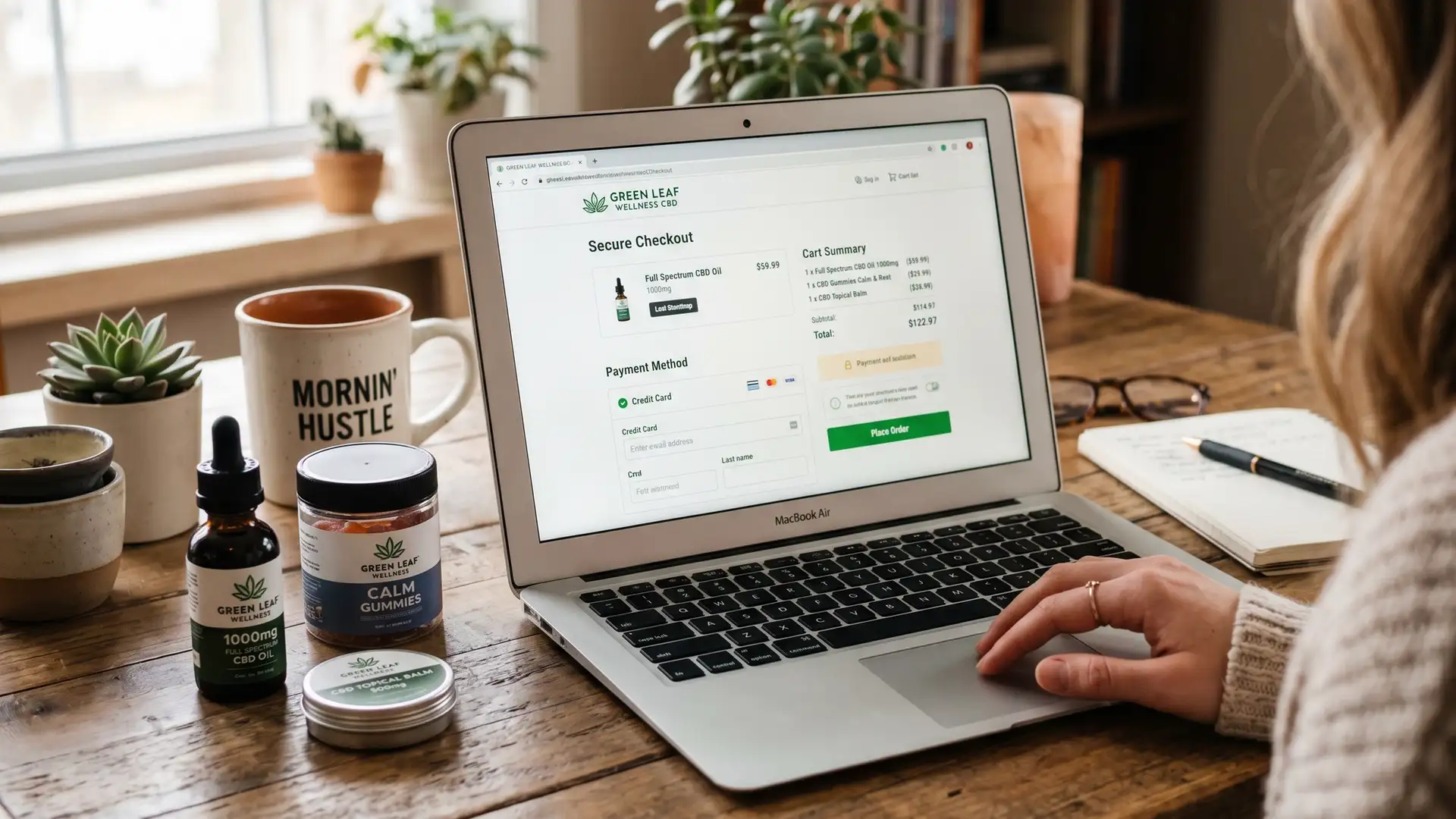
A business owner comparing a certificate of analysis to a CBD product label
Credit: Adaptiv Payments
Fees for a hemp or CBD merchant account
CBD is still a high-risk category, so CBD credit card processing costs more than standard retail processing. Flat rate pricing isn’t on offer for most CBD sellers, and the accounts we set up often carry a rolling reserve of 5 to 10% held for 90 to 180 days. Your processing fees depend on processing history, chargeback ratio, product mix and how much of your volume comes from online sales and subscriptions.
When you compare a credit card processor or merchant services offer, ask about the monthly fees, the reserve, how chargebacks are handled and whether the rate changes after your first 90 days. We see sellers chase a low quote from a processor that doesn’t support CBD, and the account gets shut down a few months later with their funds frozen.
Industrial hemp businesses that sell fiber, seed, grain or building materials and no cannabinoid products are often underwritten as standard risk.
Payment options beyond credit cards
A hemp business doesn't have to rely on credit cards alone. Most CBD merchant accounts can also accept debit cards, and debit card payments often cost less than credit. ACH and eCheck payments go straight from the customer's bank account and are a good fit for wholesale and subscription orders. The gateways we set up handle PCI compliance, tokenized card storage and fraud screening, so you don’t have to build or maintain any of that yourself.
FAQ: Hemp merchant accounts and the THC ban
Partly. A September 2026 funding law moved most of the change from November 12 to December 11, 2026. The rule for cannabinoids that can't occur naturally still starts November 12. Further delays have been proposed, but none has passed.
Yes. Starting December 11, 2026, the 0.3% hemp limit counts total THC, including THCA, so most THCA flower and pre-rolls no longer qualify as hemp.
It changes the federal definition of hemp, not state cannabis programs. Licensed marijuana businesses in legal states keep operating under state law, but hemp-derived THC products sold outside those programs lose federal hemp status everywhere.
Yes, if each product has no more than 0.4 mg of total THC per container, uses cannabinoids extracted from the plant rather than synthesized, and is legal in the state you ship to.
A processor that places you with a bank that knowingly underwrites hemp. That’s what we do: we disclose your full product line up front and match you with a bank that has already approved businesses like yours. Platforms like Square, PayPal and Shopify Payments don't support CBD, and Stripe only takes it as a restricted business that needs approval.
Only if your acquirer approved those products in writing and they're legal in your state. After December 11, 2026, no card processor can take them.
How Adaptiv Payments works with hemp and CBD businesses
We provide hemp merchant services for CBD and hemp businesses selling compliant products, like CBD oils, tinctures, topicals, gummies and pet products, as long as they’re under the federal limits. When you apply, we go through your full catalog and match every product to a current COA before we submit you to a bank, so you find out what needs to change before an underwriter does.
If you're moving off Square, we'll set up a dedicated CBD merchant account with online and in-person payments, recurring billing and chargeback tools, and most merchants are live within one to two weeks. Sellers who are reformulating can also add ACH payments as a backup payment method.
Apply for a hemp merchant account
Tell us what you sell and where you ship, and we’ll tell you which products a bank will approve and what it’ll take to get your account set up. If your products are compliant, apply for a high-risk merchant account and we'll review your catalog and match you with a bank that approves hemp businesses.